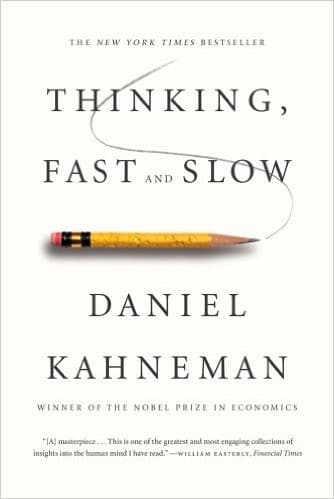
Is Thinking, Fast and Slow Worth Reading?
Ada’s Score
Kahneman opens not with a grand theory but with a simple observation: the mind is two systems, one fast and instinctive, one slow and deliberate. That deceptively humble entry point is the book's great strength. The argument builds with genuine intellectual rigour, grounded in decades of behavioural research yet written with the clarity of someone who trusts their audience. Where it occasionally strains is in its length — the middle sections can feel repetitive. But the core insights on bias, judgment, and overconfidence are sharp, enduring, and genuinely unsettling. Best suited to anyone willing to sit with discomfort about their own reasoning.
Deep Dive“Kahneman hands you a mirror that shows cognitive bias instead of your face. Uncomfortable, fascinating, and impossible to put down entirely.”
The Humbling of a Confident Mind
There's a particular vertigo that sets in about a third of the way through this book, when Kahneman has quietly dismantled enough of your assumptions that you start second-guessing your own thoughts in real time — and I found that unsettling in the best possible way. He writes with the calm authority of someone who has spent decades watching human minds fail gracefully, and that restraint gives the prose an unusual dignity. What lingers isn't a checklist of cognitive biases but something closer to humility — a gentle, persistent reminder that certainty is almost always a performance.
Ada Brief
AI reading intelligence“Kahneman hands you a mirror that shows cognitive bias instead of your face. Uncomfortable, fascinating, and impossible to put down entirely.”
The Humbling of a Confident Mind
There's a particular vertigo that sets in about a third of the way through this book, when Kahneman has quietly dismantled enough of your assumptions that you start second-guessing your own thoughts in real time — and I found that unsettling in the best possible way. He writes with the calm authority of someone who has spent decades watching human minds fail gracefully, and that restraint gives the prose an unusual dignity. What lingers isn't a checklist of cognitive biases but something closer to humility — a gentle, persistent reminder that certainty is almost always a performance.
Thinking, Fast and Slow Review
Kahneman hands you a mirror that shows cognitive bias instead of your face. Uncomfortable, fascinating, and impossible to put down entirely.
Rating: 4.5 / 5
Book Details
- Publisher
- Farrar, Straus and Giroux
- Published
- January 1, 2013
- Pages
- 499
- Language
- ENG
- ISBN-13
- 9780374533557
Get This Book
Affiliate linksISBN: 9780374533557
Disclosure: ReadAda earns a commission on purchases made through these links, at no extra cost to you.
Ada’s Score
4.5
Ada’s editorial score — not an aggregate of reader reviews.
Common Questions About Thinking, Fast and Slow
- Is Thinking, Fast and Slow worth reading?
- Kahneman hands you a mirror that shows cognitive bias instead of your face. Uncomfortable, fascinating, and impossible to put down entirely. Ada rates it 4.5 out of 5.
- How many pages is Thinking, Fast and Slow?
- Thinking, Fast and Slow is 499 pages long — around 9–10 hours at an average reading pace.
Ada also recommends
More from Self-Help